A 1958 bungalow near the Scarborough Bluffs went firm nine days after the home inspector flagged asbestos in the basement floor tiles. The buyer didn’t flinch. She’d grown up in a house with the same speckled nine-inch tile, and she knew roughly what handling it would cost.
That sale wasn’t unusual. Plenty of Ontario homes built before 1990 hold asbestos somewhere, and they change hands every month without drama. The mineral itself rarely kills a sale. A seller who learns about it at the worst moment, from the buyer’s inspector, with no plan and no numbers in hand, usually does. So yes, you can sell a house with asbestos in Ontario, and the sections below show how sellers handle it.
What Is Asbestos and Why Does It Matter in Ontario Homes?
For years I treated any asbestos finding as a reason to walk away from a property. That habit cost me some good houses.
Asbestos is a family of natural fibrous minerals. Builders across Canada leaned on it for decades because it resists heat and fire. Chrysotile, also called serpentine asbestos, is the type you’ll meet most often in Canadian housing. Amosite turns up too, usually in insulation board and pipe lagging.
In an Ontario house, asbestos tends to hide in vinyl floor tiles and the black mastic under them. Check the pipe wrap in the basement. Stippled ceilings, drywall joint compound, attic vermiculite, furnace duct tape, cement siding and old roofing can all carry it.
Undisturbed insulation sitting quietly inside a wall isn’t releasing anything. Risk shows up when somebody sands, cuts or drills it. Loose fibers get inhaled and settle into lung tissue, where decades later they can cause asbestosis, lung cancer or mesothelioma. Those diseases are why the rules exist, and they’re also why buyers get twitchy.
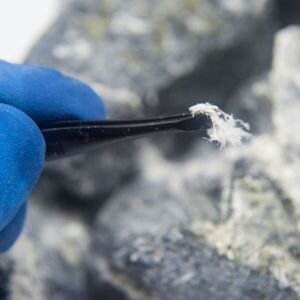
You can’t spot asbestos by eye, no matter how closely you look. Nine-inch tile is a strong hint, and so is grey pipe wrap with a canvas skin. Hints aren’t evidence, though, and no buyer’s lawyer treats them that way. Confirmation comes from a lab, using a small sample an assessor takes under controlled conditions. Until you have that, the safest move is to do nothing. Leave the tile under the carpet. Don’t scrape the stipple off the living room ceiling because flat ceilings photograph better. Pre-listing touch-ups are exactly how a harmless, dormant material becomes a contamination problem three weeks before you need to be out.
Ontario’s rule book is O. Reg. 278/05, made under the Occupational Health and Safety Act. It treats material with 0.5 per cent or more asbestos by dry weight as asbestos-containing material. The province’s own guide to designated substances in the workplace notes that the regulation excludes owners of certain private residences. It’s worker safety law aimed at construction projects, and it doesn’t order you to strip your family home.
Can You Legally Sell a House with Asbestos in Ontario?
Last year a brother and sister called me from Peterborough about their mother’s side-split. She’d moved into long-term care, and the son had just taken a job transfer with five weeks to leave the province. The basement and garage held original 1960s floor tiles, a workbench and about forty years of paint cans. If you’re helping a parent through the same move, our guide to selling your parents’ home in Ontario to fund their long-term care walks through the timing.
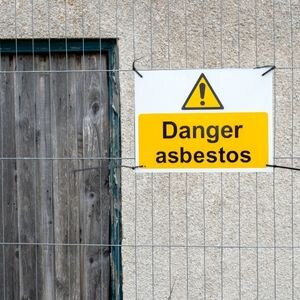
Yes, you can sell it. No provincial law forces you to remove asbestos before you transfer a property in Ontario. Nothing requires a clean-air certificate at closing either.
What the law cares about is honesty. Ontario real estate still runs on caveat emptor, so a seller usually doesn’t have to volunteer every flaw. The exception matters here. A known latent defect that makes the home dangerous or unfit to live in has to be disclosed, and an “as-is” clause won’t erase that duty. Ownright’s plain-language breakdown of latent versus patent defects for Ontario sellers is a solid primer before you talk to your own lawyer.
Asbestos sits on a spectrum, and condition and location decide where it falls. Crumbling pipe wrap shedding onto a basement floor reads very differently from sealed tile under carpet.
Your Ontario real estate lawyer earns their fee on this exact question. The Seller Property Information Statement (SPIS) is generally voluntary, and plenty of lawyers advise against filling one out. An SPIS asks dozens of questions about things you may not know, and a wrong guess turns into a misrepresentation. A targeted clause your lawyer drafts is much safer. It names the material, the lab result and its condition, and the buyer accepts it in writing.
The Peterborough file went roughly that way. The tile tested positive. It was flat, sealed and under a rug nobody had moved since the eighties, and their lawyer named it in the agreement. Two of their four showings asked about it. One wrote the offer. The house closed inside the son’s five weeks, and the disclosure that felt like a confession ended up holding the sale together at inspection.
Should You Remove Asbestos Before Selling Your Ontario Home?
“Do I have to rip it all out before I list?”
Almost never, at least in my experience across a lot of closings. Paying for full abatement on stable, non-friable material before a sale is usually money you won’t get back. You spend it, the buyer still negotiates, and you’ve paid for an improvement nobody photographs.
Abatement work in Ontario generally runs between $8 and $15 per square foot in 2026, according to abatement contractor MAGCOR’s Ontario cost breakdown. A few floor tiles or a short run of pipe wrap tends to land around $1,000 to $5,000. Encapsulation seals the material in place instead of tearing it out, and it costs far less at roughly $2 to $6 per square foot. It suits anything that’s sound but exposed, like pipe wrap with a torn jacket. A contractor coats or wraps it so the fibers stay put, and the next owner gets a documented fix without the bill for full removal.
Removal makes sense in narrower cases. Friable material that’s already breaking down should go, full stop. The same goes for asbestos in a spot the next owner has to open anyway, like a furnace room. It also helps if your likely buyers are young families who won’t take on any remediation.
If you get quotes, get more than one and compare the same scope. A proper quote names the material, its location, its condition and the work classification. It should also spell out containment, disposal and whether air clearance testing is included. Ask what happens if they open a wall and find more, because that’s where a tidy number becomes a change order. When the job’s done, get the clearance paperwork in writing. That’s what you hand a buyer’s agent later, and without it you’ve paid for work you can’t prove.
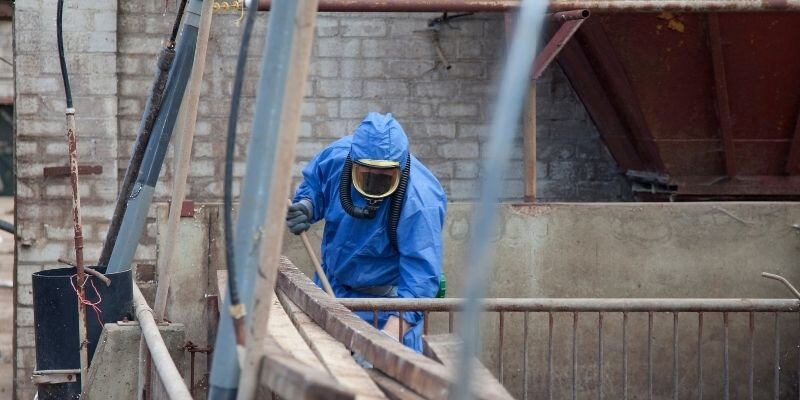
One hard rule: don’t do it yourself. The regulation exempts owners living in their own private residence, but every contractor you hire is still bound by it. A handyman who tears out tile without proper containment is breaking Ontario law, and you could get pulled into the liability as the owner. Certified removal crews in Ontario charge more for a reason, and in every file I’ve worked that reason was never padding.
If the remediation math doesn’t fit your timeline, selling as-is to a cash buyer like Bloom Homes skips the whole question.
How Will Buyers React to Asbestos in Your Property?
Sellers brace for every buyer to vanish the second the inspector says the word, yet only a couple actually walk. The rest reach for a calculator, because most Ontario buyers looking at a pre-1990 house half expected it already.
Reactions split by buyer type. Renovators and investors barely blink, since they budgeted for it before they walked in. First-time buyers stretched to the top of their pre-approval get spooked, and fairly so, because they’ve got nothing left for remediation. Families buying a forever home usually want it handled before closing, and well before the kids move in.
Mortgage lending is the piece that surprises people. Standard financing in Canada doesn’t automatically die over asbestos. Most lenders care far more about appraised value and the state of the roof, furnace and foundation. An appraiser who flags deteriorating material as a health hazard can still trigger a holdback or a repair condition, and that’s what stalls sales.
GTA buyer confidence has softened anyway, which changes the tone of these talks. The average GTA sold price in September 2026 was $1,006,409, down 5.1 per cent from a year earlier, according to WOWA’s Toronto market report. Buyers holding the leverage now dig into details they’d have skipped two years ago.
What wins buyers back is transparency backed by paperwork. A lab-confirmed report from a certified assessor, with a written quote attached, turns a vague health scare into a line item. I’ve watched that one document save more sales than any price cut.
Say the inspector has just called and you’re in the middle of it. Don’t argue, and don’t promise anything on the spot. Ask the agent for the relevant page of the report in writing, then answer with facts. An inspector’s note usually says “suspected” asbestos, because inspectors don’t take samples. That gap is your opening. Offer to split the cost of a lab test, or hand over one you already have. Either move shifts the talk off fear and onto numbers, where you can actually negotiate.
Will Asbestos Lower Your Home’s Value in Ontario?
Appraisers in Ontario don’t have an asbestos deduction line. There’s no standard percentage and no published adjustment for chrysotile in the basement. The discount comes from negotiation, which is why it swings so much from one sale to the next.
In practice, the hit tracks two things: the real cost of remediation and a risk premium for uncertainty. Buyers rarely stop at the quoted number. They pad it, because they’ve heard the walls might hide more, and I’ve seen that padding run past the actual repair bill. Testing narrows the uncertainty, and the premium shrinks with it.
When the abatement credit request comes in, counter with the contractor’s quote instead of a round number. A quote can be checked, but a round number invites more guessing. The buyer’s guess will always be higher than yours. If the gap stays wide, holding funds back on closing until the work is done can satisfy a nervous buyer for less than a price cut. Your lawyer can tell you whether that setup works for your sale.
Market conditions decide how much padding you’ll absorb. Ontario’s MLS Home Price Index benchmark sat at $736,300 in September 2026, down 3.9 per cent from September 2025, according to CREA’s provincial figures. New listings came in at 39,261 that month, a 10.3 per cent drop year over year. Fewer competing houses help you. Softer prices don’t.
Location still outweighs the asbestos. A Leslieville semi with tile in the basement sells near the top of its range, because the land carries the price. The same tile in the same condition on a rural property outside Belleville, where buyers have plenty of other choices, gets priced harder. If your property is in the capital region, we can help you sell your house fast in Ottawa as-is, tile and all.
Condo and townhouse sellers face their own wrinkle. Common-element asbestos is the condo corporation’s problem. A status certificate noting a planned abatement project can still rattle a buyer’s lawyer, though. Order the certificate before you list, then read the reserve fund study and board minutes yourself, and be ready to answer whether a special assessment is coming.
How Do You Sell a Home with Asbestos in Ontario?

You’ve got three practical routes. The right one depends mostly on your timeline and how much cash you can tie up before closing.
The first is a conventional listing with full disclosure, priced to reflect the condition. Test first, then attach the report and the abatement quote to the listing package. Buyers do the math in front of you instead of behind your back. This route works best for sellers whose material is intact and contained, like attic vermiculite nobody needs to crawl through. Tell your agent before the photos are taken, so buyers see the disclosure early as plain information.
Abatement before you list is the second route. The regulation sorts this work into three types. Type 1 covers intact, non-friable material and costs the least. Type 3 covers removing more than one square metre of friable material, and it needs full containment, so it costs far more. MAGCOR puts attic vermiculite removal at around $7,500 and up. You’ll also wait on scheduling, air clearance testing and paperwork before photos. You recover some of that spend in the sale price, though rarely all of it. Build the calendar backward from your listing date and leave slack, since certified crews book up.
Your third option is selling as-is to a cash buyer who prices the condition and closes without a financing condition. You give up retail value, and in return you skip the inspection renegotiation, the lender appraisal and weeks of waiting to see whether the buyer’s bank blinks. For an estate with four siblings and a vacant house burning carrying costs, that trade often makes sense. If your property sits in Waterloo Region, we buy houses in Cambridge in as-is condition. Down in the Niagara Region, we also work as cash home buyers in Niagara Falls. To see how Bloom Homes can help with a property like yours, our about page explains our approach.
None of these routes lets you skip disclosure. Ontario’s rule on latent defects, the ones a buyer can’t see and you know about, isn’t negotiable. A positive asbestos test counts as knowledge. Hiding it invites a claim after closing that can cost far more than the asbestos ever would. Keep the lab result, quotes and clearance paperwork in one file, and give your lawyer a copy at the start, long before closing. Unpermitted renovations follow the same logic, and our piece on selling a house with unpermitted work or additions in Ontario explains how disclosure plays out there.
Frequently Asked Questions
Do I legally have to test for asbestos before selling in Ontario?
No. There’s no provincial requirement to test a property before listing. Ontario Regulation 278/05 makes owners check for asbestos before certain construction work, but it excludes owners of a private residence they or their family live in. Any contractor doing the work still has to follow it.
Does asbestos have to be removed before closing?
Not unless your sale agreement says so. Intact, undisturbed asbestos can stay where it is. Removal becomes a closing issue when a buyer writes it into a condition or a lender’s appraiser flags it as a safety concern.
Will a bank refuse a mortgage on a house with asbestos?
Rarely, and not as a blanket policy. If the material is friable and exposed, the appraisal may come back with a repair requirement that holds up funding. In that case the lender usually wants proof the job is done, such as the contractor’s clearance letter, before it releases the money. Contained material in good condition usually passes without comment.
How much does asbestos testing cost in Ontario?
MAGCOR puts lab testing at $30 to $150 per sample. A full professional inspection runs about $250 to $1,300 or more, depending on how many areas need sampling. It’s the cheapest piece of this whole process.
Can I sell an Ontario home with asbestos without fixing anything?
Yes. You disclose what you know, price for it and find a buyer comfortable with the condition. Cash and investor buyers do this all the time because they aren’t borrowing against the property.
If you’re sitting on a house with attic vermiculite or tile you’re afraid to lift, you don’t have to decide anything today. Get a sample tested and see what’s really there. Then weigh your options with real numbers in hand. If you’d rather skip the repairs and the renegotiation, feel free to contact us and ask what an as-is offer on your place might look like. It’s free, and there’s no obligation.
Helpful Ontario Blog Articles
- Can I Sell My House While Going Through Bankruptcy in Ontario?
- How to Find a Legitimate Cash Home Buyer in Ontario
- What Does “We Buy Houses As-Is” Really Mean?
- Inherited A House In Ontario? Here’s What To Do Next
- Tips for Selling Your Vacant Property Quickly in Ontario
- How Long Does It Take to Sell a House for Cash in Ontario?
- How to Sell Your Home Fast in a Competitive Ontario Market
- What Tired Landlords In Ontario Can Do With Problem Rentals
- How To Sell Your House Fast In Any Condition In Ontario
- Do You Need a Property Deed to Sell Your House in Ontario
- Can You Sell a House with Asbestos in Ontario
- Selling Home With Reverse Mortgage
- How to Sell Your Apartment in Ontario
- Can the Seller Back Out of a Contract in Ontario