Two siblings called me on a Thursday about a duplex their family owned in Barrhaven. Closing their father’s estate had taken months, and they just wanted it handled cleanly before the end of the year (estates that drag on wear families down).
One call taught me something I keep seeing: selling a multi-unit property in Ontario is a completely different transaction than selling a house, and most owners don’t find that out until they’re already in the middle of it.
Ontario’s Multi-unit Market Right Now
Duplex, triplex, and fourplex transaction volume in Ottawa alone climbed from 74 sales in the January, July window of 2024 to 98 sales in the same window of 2026, a 32 percent increase in two years. Demand is real. But selling into that demand takes preparation that single-family sellers rarely need.
Smaller duplex, triplex, and fourplex properties in Ottawa were averaging 61 days on market in 2025, while the average price for that category sat at $919,791. Those numbers look good on paper until you realize that a tenanted property with documentation problems or zoning questions can easily sit at the long end of that range, or fail to close at all (I’ve watched deals unravel over missing N4 notices).
The buyers coming into this market are investors. They’re running numbers, checking cap rates, and scrutinizing leases. A motivated owner who isn’t prepared for that level of diligence often ends up dropping their price or watching deals fall apart at condition removal. This is not a market problem. That’s a preparation problem.
What Is a Duplex Home and Does It Qualify as Legal in Ontario?
With multi-unit properties, the single most common complication I see isn’t the price negotiation. It’s legality.
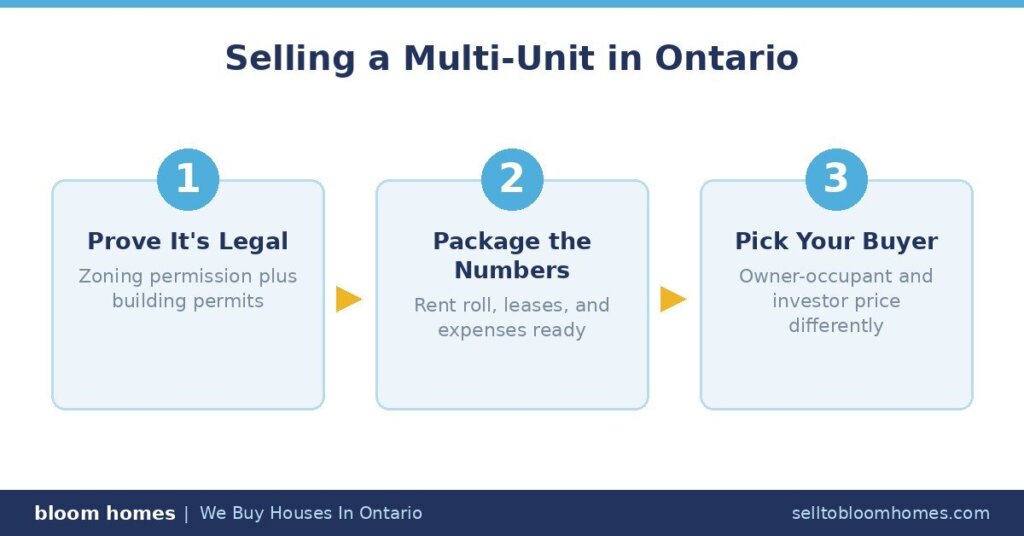
A legal duplex contains two fully self-contained dwelling units within one building, with each unit meeting minimum standards for living space, safety, and access. A property is only legal if the municipality has approved two residential units through zoning permissions and building permits. An illegal unit can void a sale, create financing refusals, and expose a buyer to municipal orders to remove the conversion (a costly and disruptive process).
Legal duplexes may be side-by-side, stacked vertically, or configured front-to-back. The physical form doesn’t determine legality. The permits do. If you can’t produce the building permit for a basement conversion or addition that created the second unit, the buyer’s lawyer will flag it. Get ahead of that by pulling your records from your municipality’s building department before you list.
Duplex vs Triplex vs In-law Suite: What Is the Difference in Ontario?
People mix these up constantly, and the confusion costs money.
Ontario’s residential zones run from R1 (single detached) through R5 and RM (multi-unit), with each tier controlling permitted density. A duplex has two self-contained units. A triplex has three. An in-law suite may look identical to a basement apartment but is treated differently under zoning bylaws and financing rules (lenders care about this distinction).
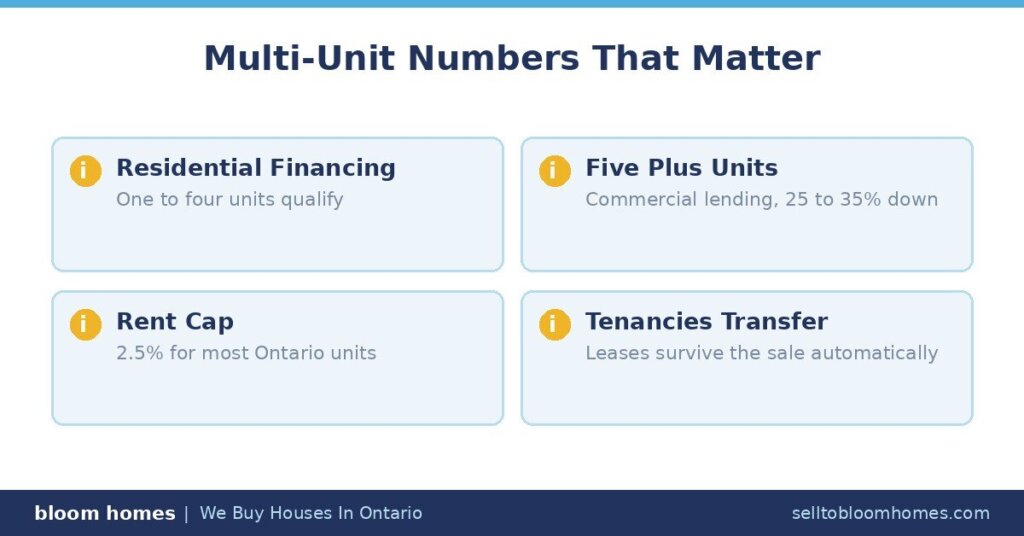
In Canadian lending, a multiplex with one to four self-contained units is classified as a residential property; once a building reaches five units or more, it becomes a commercial property. A fourplex buyer can use residential mortgage financing, which means access to standard rates and the same lenders you’d use for a single-family home. A five-unit buyer suddenly faces commercial lending requirements, larger down payments, and a much smaller pool of lenders.
Ontario’s More Homes Built Faster Act requires up to three units as-of-right on serviced residential lots and removes parking minimums beyond one space. How your property was created, and when, affects whether it meets current zoning rules or grandfathered ones (the date matters more than you’d think). Your local planning department can confirm which applies to your address.
Who Buys Duplex Homes in Ontario and Why?
Not long ago, I worked with a family selling a side-by-side duplex in Kitchener. One unit had a long-term tenant paying well below market rent (below market by a wide margin). Two different buyer profiles came to the table: a young couple who wanted to live in one unit, and a portfolio investor looking purely at income.
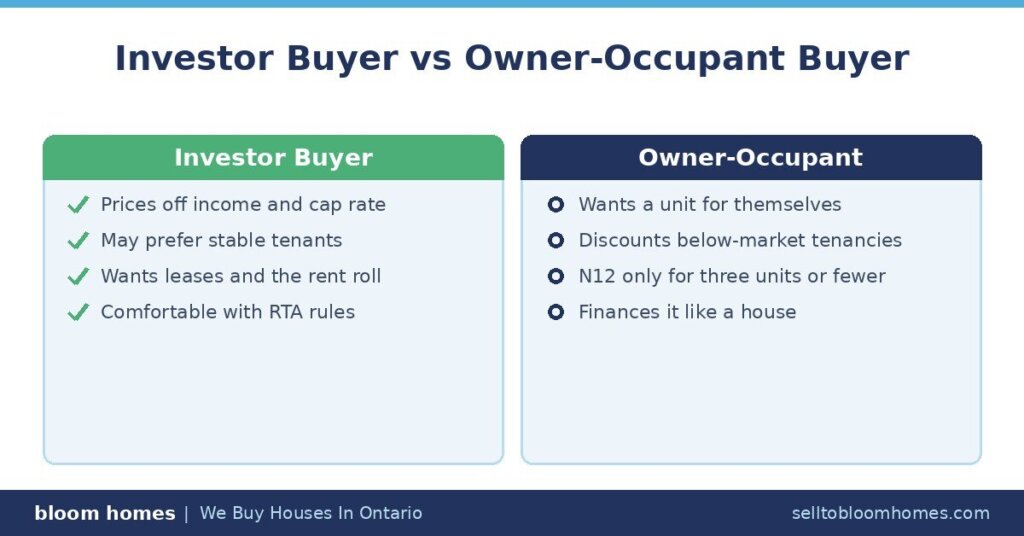
Knowing which one your property appeals to shapes how you price and present it. Owner-occupant buyers will discount heavily for a below-market tenancy they’d have to navigate. Investors may actually prefer a stable tenant, even at lower rent, because the income is predictable and the unit isn’t sitting vacant while they figure out next steps.
Investors are drawn to multi-unit properties for steady cash flow, long-term equity growth, and reduced vacancy risk. A team like Bloom Homes can help you figure out which buyer your specific property is best positioned for before you go to market, which means you’re not guessing when the offers come in.
What to Check Before You Buy a Duplex in Ontario
Buyers walk in expecting a simple income property and find a full due diligence checklist waiting for them. Those who don’t anticipate that often struggle to respond.
Zoning bylaws regulate land use within a municipality, dictating what types of buildings can be constructed in specific areas, including requirements for lot size, setbacks, and parking. A buyer’s lawyer will verify all of this, so have your paperwork clean before the deal is even accepted. Separate utility meters, fire separation between units, egress windows in basement units, and smoke alarm placement all get scrutinized in a way that a standard home inspection never touches.
Inspecting a multi-unit property takes longer and costs more than a single-family inspection. Each unit needs to be assessed independently, along with common areas, the shared roof, the electrical panel, and any shared HVAC infrastructure. Sellers who’ve deferred maintenance across multiple units find these inspections painful, and I’ve watched more than one deal slow to a crawl right here.
How Are Duplex and Multi-unit Homes Financed in Ontario?
For duplex through fourplex sales, buyers use residential financing, bringing standard stress tests, standard appraisal processes, and standard conditions. This is good for sellers because the buyer pool is wider. Commercial properties with five or more units require a 25 to 35 percent down payment and a more rigorous financial audit.
What investors care about beyond price is the rent roll. Actual current rents, not what you think the units could get. For most private rentals in Ontario, the annual rent increase is capped at 2.5%, with units first occupied after November 15, 2018 being exempt. A buyer will calculate how long it takes to get rents to market level and discount the purchase price accordingly. Have your lease agreements, rent payment history, and any rent increase notices ready before a buyer asks, because a missing document slows the whole process down.
Bloom Homes works directly with sellers who own tenanted multi-unit properties and understands how to value them honestly without the guesswork.
How to Find and Evaluate Duplex Homes for Sale in Ontario
Multi-unit buyers want the gross rent, the expenses, the unit breakdown, and the zoning confirmation up front. Hiding that information or making buyers dig for it creates friction. Friction kills deals.
You must know the per-door math, not just the total, when pricing a duplex. A property that looks expensive as a whole may look very reasonable when broken down to cost per unit compared to nearby investment properties.
What Is Different About Selling a Duplex or Multi-unit Property in Ontario?
A lease does not automatically end when a landlord sells. The new buyer takes over as landlord with all the same rights and responsibilities. They’re not buying empty space they can do what they want with. They’re buying into an existing relationship, with a tenant who has legal protections already in place.
An N12 notice for a purchaser’s own use only applies where the residential complex has three or fewer units; duplexes and triplexes qualify, but a fourplex does not. Sellers of larger properties need to understand upfront that their buyer is inheriting tenants with full protections under the Residential Tenancies Act, 2006. That changes what buyers will pay and how they’ll structure their offers.
A seller in Brampton I worked with had two consecutive MLS listings expire with zero firm offers. The property was priced reasonably, but the listing didn’t address the tenancy situation clearly, and investor buyers passed because they couldn’t quickly assess their exposure. Selling directly to a local buyer who already understands the RTA cut through all of that. The deal closed in under two weeks.
If you own a duplex or multi-unit property in Ontario and the traditional listing route hasn’t worked, or you don’t want the exposure of coordinating showings with tenants, Bloom Homes buys multi-unit properties directly, as-is, with full awareness of tenant situations.
Frequently Asked Questions
Are Duplexes Harder to Sell Than Single-family Houses?
They can be, but not for the reasons sellers usually expect. The buyer pool is smaller because it’s mostly investors and a subset of owner-occupants, not the full market. Documentation gaps around zoning, permits, and leases create friction that a standard home sale doesn’t have. Pricing correctly to the income the property actually generates, rather than to gut feeling, makes the biggest difference.
Is a Duplex Considered a Multi-unit Property?
Yes. A duplex is a multi-unit property with two self-contained dwelling units under one roof. In Ontario’s lending system, duplexes through fourplexes are classified as residential properties, while buildings with five or more units cross into commercial territory with different financing rules entirely.
What Makes a Duplex Legal in Ontario?
Two things: zoning permission and building permits. The municipality has to allow two residential units on that specific lot, and the conversion or construction has to have been done with proper permits and inspections. A basement apartment finished without permits is not a legal second unit, even if someone has been renting it for years. Confirm both through your municipality’s building department before listing.
What Are the Disadvantages of Owning a Duplex?
Managing two tenancies under Ontario’s Residential Tenancies Act adds complexity that single-family ownership doesn’t. Maintenance costs cover two units, two kitchens, two sets of appliances. Rent increases are capped by provincial guidelines for most units. And if a tenant dispute goes to the Landlord and Tenant Board, it can take months to resolve. The income potential is real, but so are the ongoing responsibilities.
If you own a duplex, triplex, or other multi-unit property in Ontario and you’re trying to figure out the right path forward, we’re here to talk it through. No pressure, no obligation. Reach out to Bloom Homes whenever you’re ready.