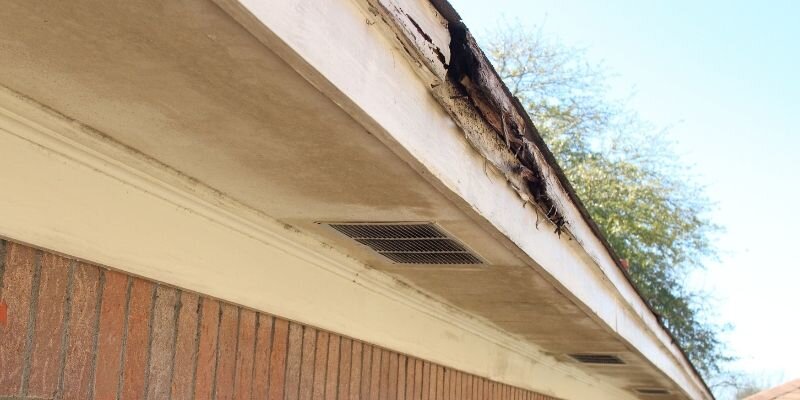
A termite worker is about six millimetres long, and a colony of them can still cost you more at closing than a leaking roof. Nobody budgets for them. Most Ontario insurance policies won’t touch them, and the damage sits inside a wall for years before anyone notices. I’ve bought houses across southern Ontario for a long time, and termites come up more often than people outside the business would guess. If you need to sell a house with termites in Ontario, you’ve got more options than you think. Many of them start with knowing exactly what’s in your walls and on your property.
How Do You Know If Your Ontario Home Has Termites?
“My house is brick, so I’m fine.” I hear that one all the time, and it’s wrong. Most brick homes in Ontario are brick veneer over a wood frame, and termites never wanted the brick anyway. Eastern subterranean termites live in the soil, and they come up through foundation cracks or any wood touching the ground, then eat the framing from the inside out. That’s why damage in an Ontario house is usually well along before anyone sees a single insect.
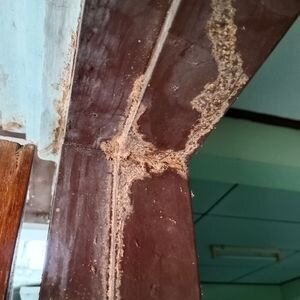
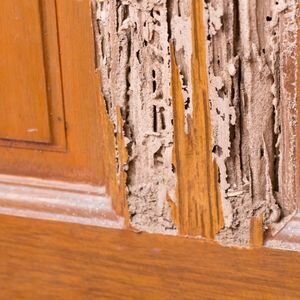
Mud tubes are the giveaway. Look for pencil-width, earth-coloured tunnels running up a basement wall or a joist, often behind the furnace or the laundry tubs. Termites build them from soil and saliva to stay moist on the trip from the ground to the wood. Check the sill plate where the foundation meets the framing, then tap it with a screwdriver handle. A hollow, papery sound means something has been eating. Indoors, wood can darken and paint can blister when termites are busy behind it.
Where you live in Ontario matters a lot. The City of Guelph says this species was brought in by accident from the United States to more than 30 Ontario municipalities. Toronto, Guelph, Windsor and Kitchener all have a history with it, and so do Elora and Fergus in Wellington County. Termites first damaged a building on the Toronto waterfront back in 1938. Older lakeside pockets like the Beaches have lived with the problem for decades.
What Does a Termite Inspection in Ontario Cost?
An Ontario termite inspection is usually worth paying for before you list, and it’s cheaper than most sellers expect. HomeStars puts typical inspection fees at $75 to $250, and many companies waive the fee if you book treatment on the same visit. Against a sale price, that’s a rounding error.
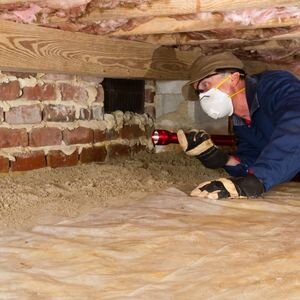
Proper inspections map where termites are active, how they’re getting in, and how far they’ve spread. A good inspector is really reading how the property meets the soil around it.
Treatment is the bigger number, and its price swings a lot. The method, the size of the property and the spread of the colony all move the price. Get written estimates from two licensed companies before you decide anything.
Ontario pest companies tend to use one of two methods. A liquid barrier means trenching around the foundation and treating the soil, which gives termites a line they can’t cross. Bait stations go in around the yard instead. Termites feed on the bait, carry it home, and the colony slowly dies off.
One legal detail is worth knowing. Under Ontario’s Pesticides Act, this kind of job has to be done by a licensed exterminator or someone they supervise. Ask for the licence number. A cheap job from an unlicensed operator means nothing to a buyer’s lawyer, and you’ll pay twice when a real company has to redo it.
Do You Have to Disclose Termites When Selling in Ontario?
Ontario has no mandatory seller disclosure form. That surprises sellers who’ve read American advice online, since many U.S. states require one. In Ontario, the rules come from court decisions plus a few specific laws.
The starting point is caveat emptor, or buyer beware. An Ontario seller generally doesn’t have to disclose flaws a buyer could find with a fair inspection. The big exception is a known latent defect that makes the property dangerous or unfit to live in. Visible mud tubes in an open basement are likely a patent defect. Termites you know are hollowing out a joist in a sealed crawlspace are a very different story.
Sellers get into real trouble with concealment. You can’t hide a problem or lie when an Ontario buyer asks you straight out, even about a defect that would normally be the buyer’s risk. Painting over a damaged sill plate the week before listing photos is exactly what Ontario courts punish. An as-is clause shifts patent defect risk to the buyer, though it won’t protect a seller who hid a known latent defect. Ownright has a clear breakdown of latent versus patent defects if you want to see where courts have drawn that line.
Agents carry their own duty now. The Trust in Real Estate Services Act took effect December 1, 2023. Under it, a listing agent who knows of a defect the seller must legally disclose has to share it with every buyer who shows interest. You can read RECO’s guidance on what a seller must disclose for the details. Your Ontario agent staying quiet about a termite problem isn’t an option anymore.
My plain opinion is to disclose anyway. Ontario’s legal minimum is lower than the smart move, because termite history found after closing tends to turn into a lawsuit. Under Ontario’s Limitations Act, a buyer generally has two years from finding the problem to start a claim. Guelph goes further and tells sellers in past termite areas to disclose that history to buyers.
How Much Do Termites Lower Your Home’s Value in Ontario?
Less than you’re bracing for, if you handle it well. A lot more, if you hide it and get caught.
Look at the Ontario market you’re selling into. The average resale price across Ontario was $801,634 in October 2026, down 3.5 percent from October 2025. Active listings that month sat 16.4 percent above the five-year average and 40.7 percent above the ten-year average. Ontario buyers have plenty of choice, so a termite disclosure carries more weight now than it did during the 2021 frenzy.
Neighbourhood reputation can hurt more than one colony. An industry estimate put termite damage in Toronto at about $120 million a year, and said hard-hit pockets can see values fall by up to 25 percent. That figure describes whole infestation zones. Your Ontario property doesn’t lose a quarter of its value because a colony turned up under the deck.
A buyer’s agent will anchor the talks on repair costs. One GTA agent puts local Ontario termite repairs at roughly $3,000 to $10,000, with a bad colony running $5,000 to $30,000 in structural work. Expect the buyer to take the number in the report, pad it, and build a price around that.
Insurance won’t rescue you either. Standard home policies generally exclude termite damage, which means treatment and repairs come out of your pocket.
One pattern keeps showing up in my files. The houses that take the biggest hit aren’t the ones with the worst termites. They’re the ones where the seller had no paperwork. An Ontario buyer facing a shrug prices in the worst case every time.
Can You Sell a House with Termites in Ontario?
Yes, you can sell a house with termites in Ontario. Nothing in provincial law stops you, and properties with termite history change hands in Guelph, Windsor and across the GTA every month.
Where sellers slip up is thinking the inspection is the danger. More often the sale dies at financing. A lender’s appraiser who flags active structural damage can sink the mortgage approval. Your buyer walks away with their deposit, and you start over in a market that’s already moved on.
What changes is the buyer pool. List a termite-disclosed Ontario home on MLS and you’ll lose a chunk of first-time buyers right away. They’re stretched thin and have no appetite for structural unknowns.
Plenty of Ontario sellers choose a direct sale when the repair budget isn’t there. Companies like Bloom Homes Inc. buy Ontario houses in their current condition, termites included. The condition is already priced into the offer, so there’s no inspection renegotiation. If your property sits in one of Guelph’s older termite pockets, read about how we buy houses in Guelph.
What Steps Should Ontario Sellers Follow With a Termite House?
Start with a licensed termite inspection, because every later choice depends on that report. Next, get written estimates for both treatment and carpentry, since buyers will price against those numbers anyway. Then pick your path. You can treat first and list later, list as-is with full disclosure, or sell direct to a buyer who takes the house in its current condition.
Whichever way you go, build a paper file before anyone walks through. Keep the report, the estimates, the licence number and any warranty in one place. Price from a real comparable, then subtract the documented costs.
Put the termite history in writing and hand it to your agent, who’ll share it with interested buyers. Have your real estate lawyer word the as-is clause and any repair credit in the purchase agreement. That same lawyer handles the title transfer and the closing funds on closing day.
Should You Repair Termite Damage Before Selling Your Ontario Home?
The question that really matters is whether you can fund the work. If you’ve got the cash and the time, treating termites before you list is usually the better financial move. A clean, documented Ontario home draws conventional buyers, and they tend to pay more.
Sellers often mix up treatment and repair, but they’re different jobs. Killing the colony is the exterminator’s job. Replacing a hollowed-out beam under a 1940s Hamilton duplex is carpentry, and good carpenters in Ontario aren’t cheap or quick to book right now.
Timing cuts against repairs as well. Fewer Ontario owners listed this fall, with 33,510 new listings in October 2026, down 8.8 percent from a year earlier. Many are waiting for spring, and a treatment and carpentry schedule can eat that whole window.
If you decide to treat, keep every piece of paper. That means the inspection report, the licence number, the warranty and each follow-up visit record. Ontario buyers respond to documentation far better than to reassurance.
How Do You Price a Termite-damaged House in Ontario?
Pricing is where most people who sell a house with termites in Ontario win or lose money. Start with a real comparable. In the GTA, the average selling price in October 2026 was $1,024,108, down 2.7 percent from a year earlier. Find a sale like yours, then subtract honestly.
Build your number from real figures. Get a licensed exterminator’s written estimate and a contractor’s repair figure, then add them. Leave room for the hassle the buyer takes on, too. Buyers don’t just subtract the repair cost; they subtract the repair cost plus the aggravation.
Location across Ontario changes the math. The average price in the London and St. Thomas area was $601,289 in October 2026. A $6,000 repair bites harder against that price than it would in Vaughan.
Don’t add a separate “termite stigma” discount on top of all that. I disagree with anyone who says you should. One treated, warrantied infestation is a maintenance item, and sellers who discount twice for the same problem leave real money behind.
Two pricing plans work. You can price at market and offer a credit at closing equal to the documented repair cost, and let the buyer pick their own contractor. Or you can price below market as-is and decline repair talks. That tends to bring in cash buyers and investors who move fast.
Cash offers on termite properties in Ontario come in lower than retail. That’s the honest trade. You give up some price for certainty, speed and no repair bills, and for plenty of Ontario sellers that’s the right call. If you live in the city, you can see how cash home buyers in Toronto handle a property like yours.
What Do Ontario Buyers Want to Know About Termite History?
Buyers aren’t really asking whether you had termites. They’re asking whether the problem is finished.
They’ll want the basics in writing: when the termites were found, who treated them, and whether anyone has checked since. Many Ontario pest companies give you a written treatment plan and a service guarantee. If termites come back within the warranty period, they’ll return and treat again.
Monitoring records beat promises. If you’ve got bait stations in the yard with two years of inspection logs, show the log. A dated record that says “no activity” settles an Ontario buyer in a way no spoken promise can.
Some buyers ask about the municipality. Kitchener and Guelph both have termite by-laws that let an officer order soil treatment by a licensed exterminator. Call your local Ontario building or by-law office to find out whether any order applies to your property. That beats relying on secondhand stories.
Buyers also check whether wood-to-soil contact has been fixed. Pulling buried form boards, correcting the grade against siding, and replacing old deck posts set right in the dirt all count. Those fixes are cheap, and they tell an Ontario buyer you understood the problem instead of just spraying it.
What Are Your Options If Termites Are Found During a Home Sale in Ontario?
The standard playbook goes like this. The buyer asks for a repair, you agree on a credit, everyone signs an amendment, and the sale moves ahead. In Ontario that works when the report says “minor activity, localized.” It falls apart once the inspector writes “structural.” Then the lender wants the work done before closing, and your buyer can’t fund it. An amendment nobody can agree on can kill a firm sale weeks before closing.
At that point you’ve got four real options. You can finish the repairs yourself before closing, usually by paying a licensed contractor on a rush timeline. Another route is a price cut that lets the buyer handle it after possession. You might switch to a different type of buyer altogether. Or you can pull the listing and come back later.
Timing drives the choice. Termite treatment in Ontario isn’t instant, and bait systems take months to wipe out a colony. A closing date 30 days out can’t fit a baiting program.
Switching buyer pools gets overlooked. Direct buyers take on termite properties all the time and don’t need a lender to sign off on condition. That’s how Bloom Homes Inc. can help keep your timeline intact when a regular sale falls apart.
Walking away isn’t failure, either. Sometimes the right move in Ontario is to treat the termites properly over a season and come back in spring with clean paperwork and a stronger price.
Frequently Asked Questions
Is a House That’s Been Treated for Termites Safe to Buy?
Generally yes. A treated house with records is often safer than an untreated one nobody has ever inspected. Confirm that a licensed exterminator did the work, that structural repairs followed where there was damage, and that someone has checked the property since. An active warranty plus recent monitoring records make it a reasonable house to buy.
Can You Sell Your House Without a Termite Bond?
Yes. Ontario doesn’t use the termite bond system that’s common in parts of the southern United States, and no Ontario buyer, lender or lawyer will ask for one to close. What helps instead is a current inspection report and any service guarantee from your pest company. If you have neither, you can still sell; you’ll just field more questions and likely accept a somewhat lower price.
How Long Does It Take Termites to Destroy a House?
Years, not months, which is good news and bad news. A colony works slowly enough that a home rarely becomes unsafe overnight. It also works quietly enough that damage can build behind drywall for a decade before anyone notices. How bad it gets depends on how long the termites went unnoticed.
Will Termites Show Up on a Standard Ontario Home Inspection?
Not reliably. A general home inspector will note visible mud tubes or obviously damaged wood, but most aren’t experts in wood-eating insects. If your house sits in a known termite area, a separate inspection from a licensed pest company gives you a far more useful report.
Does Treating Termites Mean They Won’t Come Back?
Treatment wipes out the colony attacking your house. It doesn’t change the fact that termites live in the soil around many southern Ontario properties. That’s why barriers and bait systems come with monitoring, and why yearly checks matter in affected neighbourhoods. Fixing wood-to-soil contact and damp spots around the foundation does more for long-term prevention than any single spray.
Should I Tell Buyers About Termites Found Years Ago and Fully Treated?
I’d tell them. A resolved termite problem with receipts, a warranty and clean follow-up inspections reads as responsible ownership to most buyers. Staying quiet risks a neighbour mentioning it at a showing, or an inspector spotting old treatment holes in the foundation. At that point, a handled problem starts to look like a hidden one.
If you’re holding a termite report and don’t know the next step, we’re happy to talk it through. The right answer might be treating the place and listing it in spring. It might be a direct sale that lets you stop thinking about joists. Whenever you’re ready to sell a house with termites in Ontario and want a straight read on yours, contact us at Bloom Homes Inc. There’s no pressure and no obligation, and no hard feelings if you go another way.
Helpful Ontario Blog Articles
- How to Find a Legitimate Cash Home Buyer in Ontario
- How to Sell Your House Fast in Any Condition in Ontario
- Can the Seller Back Out of a Contract in Ontario
- How Long a Real Estate Contract Lasts in Ontario Before It Expires
- How to Sell a House with Water in the Crawl Space in Ontario
- How to Sell an Ontario House That Needs Repairs Without Losing Money
- How Long Can a Seller Stay in the House After Closing
- How to Sell a House with Termites in Ontario
- Can You Sell a House with Mold in Ontario
- How to Sell a House with Title Issues in Ontario
- What Is the Best Time to Sell a House in Ontario
- What Appraisal Required Repairs Mean for Ontario Home Sellers
- Can You Sell a House in Ontario with a Pending Insurance Claim